
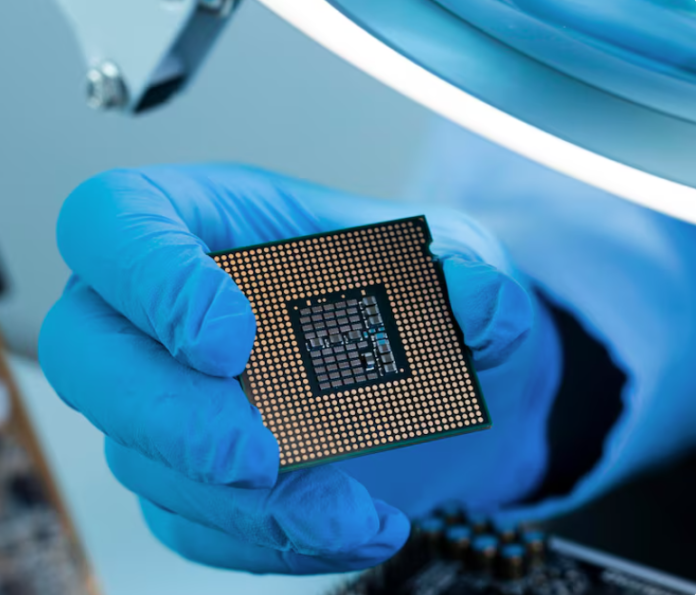
Every integrated circuit, sensor, and microchip you use today starts life on a semiconductor silicon wafer. From simple diodes to advanced logic and power devices, the wafer defines much of what’s possible in terms of performance, reliability, and cost. For researchers and product developers, knowing how wafer properties relate to downstream processing can make the difference between a successful experiment and a frustrating dead end. Suppliers like University Wafer specialise in helping labs and companies choose wafers that actually align with their electrical and process requirements.
What is a semiconductor silicon wafer, really?
At its core, a semiconductor silicon wafer is a thin, circular slice of highly purified crystalline silicon. But behind that simple definition lies a dense stack of parameters:
- Diameter (e.g., 100 mm, 150 mm, 200 mm, 300 mm)
- Crystal orientation (such as (100), (111), or (110))
- Dopant type (p-type or n-type) and resistivity range
- Surface finish (single-side polished, double-side polished, etched, lapped)
- Thickness and thickness tolerance
Each variable affects how the wafer behaves during oxidation, diffusion, implantation, etching, and deposition. That’s why a semiconductor silicon wafer isn’t just a commodity substrate; it’s the physical foundation of your entire process stack.
Why crystal orientation matters more than many people think
When you specify a semiconductor silicon wafer, one of the first decisions is crystal orientation. This choice influences:
- Etch rates and shapes in anisotropic wet etches
- Carrier mobility in certain device architectures
- Mechanical properties such as fracture behaviour
For example:
(100) wafers are common in CMOS processing and many MEMS applications.
(111) wafers are often used when specific facet geometries are desired or for certain RF and sensor structures.
University Wafer provides a range of orientations so researchers can explore how orientation-sensitive steps—like KOH etching or deep reactive ion etching—interact with their designs.
Doping and resistivity: tailoring electrical behaviour
Another key aspect of the semiconductor silicon wafer is the dopant profile. Even before additional implants, the base wafer sets a starting point for:
- Junction depths and sheet resistance
- Substrate biasing and isolation strategies
- Breakdown characteristics and leakage currents
When you order a semiconductor silicon wafer, you’ll often choose from:
P-type: typically boron-doped
N-type: often phosphorus, arsenic, or antimony-doped
Intrinsic or very high resistivity: useful for detectors, RF devices, and certain high-voltage applications By matching resistivity and dopant type to your device concept, you reduce the risk of unexpected parasitics or non-ideal device behaviour later in the flow. University Wafer supports this with detailed specifications and flexible resistivity ranges for different research and production needs.
Surface quality and polishing: why it’s not just cosmetic
A polished, mirror-like surface on a semiconductor silicon wafer is essential for high-quality thin films and lithography. Surface characteristics impact:
- Defect density and yield
- Film uniformity for oxides, nitrides, and metals
- Line-edge roughness and overlay accuracy in fine lithography
Common options include:
Single-side polished (SSP): Ideal when only one side will be processed.
Double-side polished (DSP): Helpful for double-sided devices, high-precision optics, or advanced MEMS.
Etched or lapped backsides: Useful for certain bonding or heat dissipation strategies.
By offering multiple finish options, University Wafer helps engineers choose a semiconductor silicon wafer that matches their optical and topographical requirements without over- or under-specifying.
Thickness, flatness, and mechanical stability
Mechanical parameters are easy to overlook—until a wafer cracks in the middle of a run. Thickness and flatness affect:
- Compatibility with tools and chucks
- Warp and bow during high-temperature processes
- Mechanical yield in dicing or grinding steps
A well-chosen semiconductor silicon wafer will:
- Stay within tight TTV (Total Thickness Variation) limits
- Maintain acceptable warp and bow for your equipment
- Support any thinning steps planned later in the process
University Wafer provides detailed mechanical specifications, making it easier to ensure that test wafers behave like your intended production wafers during handling, chucking, and thermal cycling.
Specialised wafers for advanced applications
Beyond standard substrates, many projects require specialised variants of the semiconductor silicon wafer, such as:
- SOI (Silicon-on-Insulator) wafers for RF, power, and advanced logic
- High-resistivity wafers for detectors, high-frequency devices, and instrumentation
- Heavily doped substrates for low-resistance contacts and certain power architectures
- Ultra-thin wafers for flexible electronics and 3D integration
Working with a supplier like University Wafer, researchers can source these speciality options without navigating an entire foundry procurement system—ideal for prototyping and low-to-medium volume work.
Matching wafer choices to process flow
Ultimately, your semiconductor silicon wafer should be chosen with your full process flow in mind. A practical approach is to:
- Map out all major steps—oxidation, implants, depositions, etches, bonding, thinning, dicing.
- Identify any steps that are orientation-, resistivity-, or thickness-sensitive.
- Check whether standard substrates are sufficient or if a speciality wafer is warranted.
- Consult with a wafer provider like University Wafer to confirm availability and lead times for your preferred specification.
By treating wafer selection as part of process design rather than an afterthought, you can avoid expensive iterations later.
Working with University Wafer as a research partner
Many universities, labs, and start-ups rely on University Wafer because they combine breadth of inventory with responsiveness to small and mid-sized orders. When you’re exploring a new device concept, you might need just a handful of wafers in several variations rather than a full production lot.
A partner experienced in semiconductor silicon wafer supply can help you:
- Source small quantities in multiple specs for early experiments
- Scale up to larger batches when a process is locked in
- Access speciality wafers without committing to full foundry volumes
This flexibility lets teams iterate faster while keeping procurement aligned with real project needs.
Conclusion: building better devices from the wafer up
Every device performance curve, yield report, and reliability test ultimately traces back to the starting semiconductor silicon wafer. By understanding the interplay between orientation, doping, surface quality, and mechanical properties, engineers and researchers can make more informed choices—and get more out of their process experiments. With a broad catalogue of semiconductor silicon wafer options and a focus on supporting innovation, University Wafer helps teams build better devices from the substrate up.