
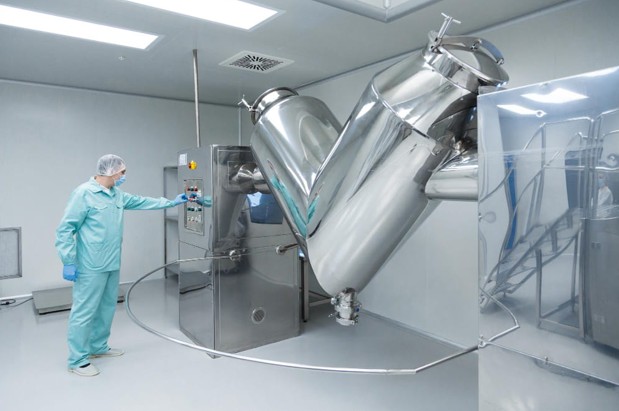
In the evolving landscape of biotechnology and pharmaceutical development, small scale bioreactors have emerged as essential tools that bridge early-stage research and large-scale production. These compact systems allow scientists and engineers to cultivate cells and microorganisms under controlled conditions, making them indispensable for experimentation, optimization, and process development.
While exploring recent developments in this field, I came across an insightful industry perspective that highlighted its steady growth and increasing relevance. It noted that the small scale bioreactors market is estimated to grow from USD 2,479 million in 2025 to reach USD 2,739 million in 2026 and USD 5,796 million by 2035, representing a CAGR of 8.68 percent during the forecast period from 2026 to 2035. This growth reflects the expanding role of bioprocessing across industries and the need for flexible, efficient research tools.
Small scale bioreactors are designed to mimic the conditions of larger industrial bioreactors while operating at significantly smaller volumes, typically ranging from a few milliliters to several liters. These systems provide a controlled environment where parameters such as temperature, pH, dissolved oxygen, and agitation can be carefully monitored and adjusted. This level of control is critical because biological systems are highly sensitive to environmental changes, and even minor fluctuations can affect cell growth, productivity, and product quality.
One of the key advantages of small-scale bioreactors lies in their ability to support rapid experimentation and process optimization. In the early stages of research and development, scientists often need to test multiple variables, including media composition, growth conditions, and genetic modifications, to identify optimal conditions for production. Small scale systems enable parallel experimentation, allowing researchers to run multiple tests simultaneously and gather data more efficiently. This accelerates the development timeline and reduces the resources required for experimentation.
Another important aspect of small scale bioreactors is their role in scaling up bioprocesses from laboratory research to industrial production. Scaling up is one of the most challenging steps in biomanufacturing, as processes that work well at a small scale may not perform the same way at larger volumes. By providing a controlled and reproducible environment, small scale bioreactors help researchers understand how different parameters influence the process, making it easier to design scalable and robust production systems. This reduces the risk of failure during large scale manufacturing and improves overall process efficiency.
Technological advancements have significantly enhanced the capabilities of small scale bioreactors, making them more sophisticated and user friendly. Modern systems are equipped with advanced sensors, automated control systems, and data analytics tools that enable real time monitoring and precise control of process conditions. These features not only improve accuracy but also generate valuable data that can be used to refine processes and make informed decisions. In addition, the integration of digital technologies allows for better data management and analysis, further enhancing the efficiency of research and development activities.
The applications of small scale bioreactors extend across a wide range of fields, including biopharmaceutical production, vaccine development, and industrial biotechnology. In the pharmaceutical industry, these systems are used to develop and optimize the production of biologics such as monoclonal antibodies and recombinant proteins. In industrial biotechnology, they support the production of enzymes, biofuels, and other bio based products. Their versatility makes them valuable tools in both academic research and commercial manufacturing environments.
Despite their many advantages, the use of small scale bioreactors also requires careful attention to data accuracy and process reliability. The insights gained from these systems are often used to guide critical decisions in product development and manufacturing, which means that the quality of data must be maintained at a high standard. In scientific and healthcare related domains, maintaining accuracy and trust is essential because even small errors can have significant consequences for product quality and safety. This underscores the importance of proper calibration, validation, and quality control in the use of these systems.
Another consideration is the need for skilled personnel who can effectively operate and interpret the results from small scale bioreactors. While modern systems are designed to be user friendly, understanding the underlying biological and engineering principles remains essential for successful application. Training and expertise play a crucial role in ensuring that these tools are used effectively and that the data generated is meaningful and actionable.
In conclusion, small scale bioreactors represent a critical component of modern bioprocessing, enabling researchers to explore, optimize, and scale biological production processes with greater precision and efficiency. Their ability to provide controlled environments, support parallel experimentation, and generate valuable data makes them indispensable in both research and industrial settings. As technology continues to advance and the demand for biopharmaceuticals and bio-based products grows, small scale bioreactors will continue to play a vital role in shaping the future of biotechnology and manufacturing.